
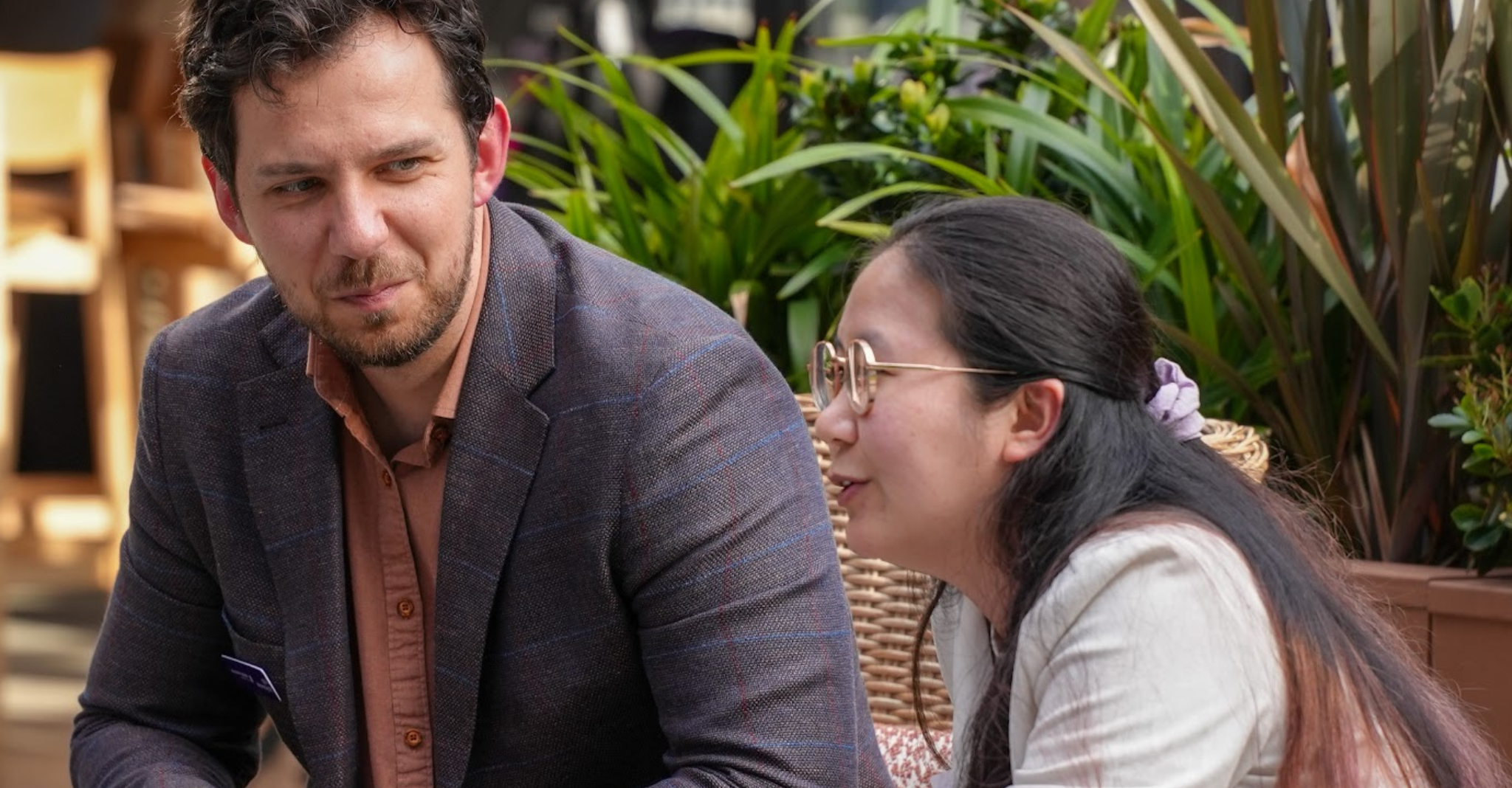
Breakthrough Victoria Fellow, Dr Michelle Chen (RMIT University PhD graduate), founder of Mental Jam, is developing mobile video games co-created with people who have lived experience of mental health challenges. These games, like Bobarista, use storytelling, visuals, music, and interactive minigames to foster emotional literacy and coping strategies. The characters are designed through community workshops to ensure authenticity and diversity. During the first six months of the Fellowship Michelle Chen has learnt to lean heavily on her support network – giving her the time to be the Founder people invested in, and solve the meaningful problems - not get stuck in the grind.
1. Looking back to when you applied, what convinced you that the BV Fellowship was the right step for your idea or research?
I applied because the BV Fellowship offered a clear pathway into research commercialisation. In universities, that process can be slow and dependent on many moving parts. The startup route felt faster, offered more opportunities, and gave me greater control over bringing the idea to life rather than waiting on others.
2. How has your project or startup evolved over the past six months, and what role did the Fellowship play in that progress?
The biggest shift has come from stepping back and deeply engaging with people. We’ve had more than 200 conversations to validate the problem we’re trying to solve. Through that, we realised our real focus should be early intervention and wellbeing literacy.
A lot of people told us they were using ChatGPT for mental health support, which is both unregulated and concerning. That insight pushed us to explore how AI could be used more safely within our product - for example, by integrating AI into our non-player characters. We’re now preparing an AEA grant and collaborating with a researcher at RMIT to progress this work.
We’re also differentiating ourselves from existing apps, which usually target people already in crisis. We want to act earlier - preventing issues before they escalate.
3. What has been the biggest shift for you personally in moving from researcher or innovator to founder?
One of the biggest personal realisations came through our team profiling. I’m naturally an introvert, even though I present as an extrovert. As a founder, you have to put yourself out there, which doesn’t always feel natural. I’ve learned to treat that part of the role like a job.
I’ve also learned to rely on my team and their strengths rather than trying to do everything myself. I don’t have to be the face of the company all the time - last year a teammate presented in Germany, and soon I’ll be presenting in San Francisco. It’s about balance.
Another important shift was embracing the idea that if you don’t ask, you don’t get. We’ve been very direct on social media about what we need, and surprisingly, many opportunities and partnerships have come from simply putting ourselves out there.
4. Can you describe a breakthrough moment over the last six months - big or small - when you realised your work had real commercial potential?
Last year during PAX (a gaming convention), we ran a panel and had no idea who would show up. More than 200 people attended, and 60 people joined our workshop. At that sort of gaming convention - where people have endless entertainment options - choosing to hear us was incredibly validating.
Another partnership came from a slightly cringey social media reel - but it worked!
For someone who values external validation, seeing people engage with our work and believe in its potential was a turning point. It made us confident that what we’re building has real commercial value.
5. If you had to distil one lesson from your first six months of building a company, what would it be?
People invest in you and your vision - technology is secondary. The real work is solving a meaningful problem.
The second lesson is that you don’t have to do everything yourself. I now have lawyers, accountants and advisors who are far more experienced in areas I initially tried to manage alone. I also never expected how much admin comes with running a business - payroll, compliance, operations - but having people who genuinely want to help makes all the difference.
The biggest takeaway? You don’t have to carry everything. Find your North Star, focus on the problem, and let others support you along the way.